Introduction: A food preparation area needs a floor-wall junction that can be mopped, rinsed and inspected without trapping soil under the sheet vinyl edge, and a soft PVC capping profile is the finishing part that closes that detail.
The floor-wall junction in a food preparation area is one of the hardest details to clean well. It receives mop water, grease, flour dust and washdown spray, and the capping profile fixed there determines whether routine cleaning is straightforward or continually catches on an open edge. In a commercial kitchen, bakery or food processing room, sheet vinyl is often the straightforward part of the floor finish. The junction is more demanding: the vinyl turns up the wall over a cove former, and the top edge must be capped cleanly so the transition stays tight during routine mopping, washdown and trolley traffic. Specification therefore needs to cover what the junction must do, how a soft PVC capping strip supports cleaning, and how to match the profile to the vinyl, cove former and wall height before ordering.
Why Food Preparation Areas Need a Sealed Floor-Wall Junction
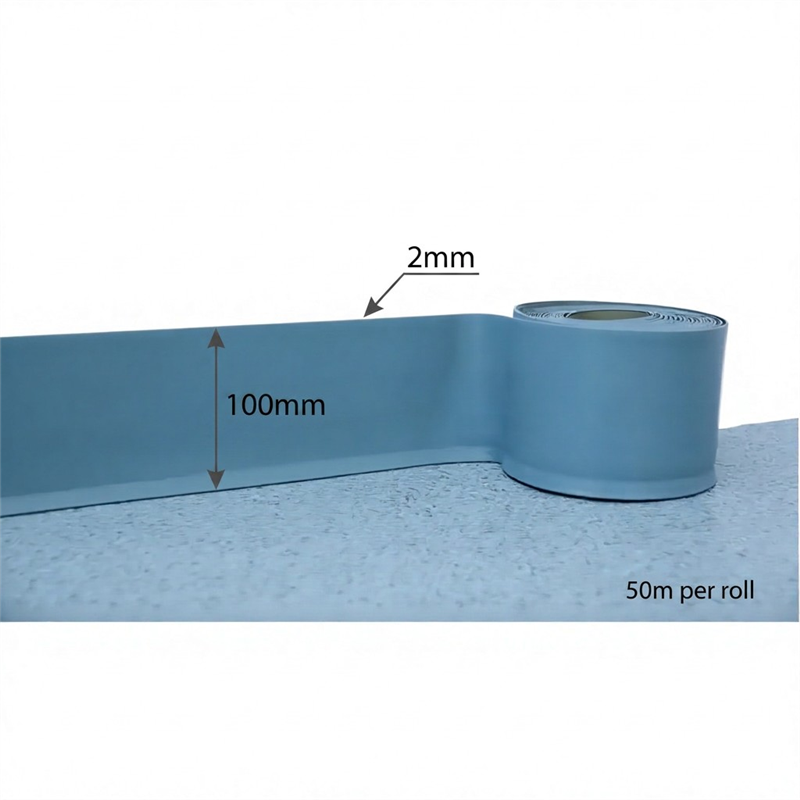
Food preparation areas require a high standard of cleanability. FDA Food Code 2022 Chapter 6 expects floor-to-wall junctions in food preparation areas to be coved and sealed so the corner can be cleaned, and UK and Australian food hygiene guidance follows the same principle. The issue is practical: a square floor-wall corner can collect flour dust, grease splash, wash water and food debris. Once material works into a gap, routine cleaning can leave it behind. A sheet vinyl floor laid with a cove former creates the curve. The vinyl is carried up the wall and bent around a shaped former, producing a radius instead of a 90-degree corner. The remaining vulnerable point is the top edge of the vinyl, a cut line at skirting height. If left open, mop water and cleaning solution can sit against it, the vinyl edge can lift, and moisture can collect behind the finish. A PVC capping strip closes that edge. It sits over the turned-up vinyl, bonds to the wall with contact adhesive and holds the vinyl tight, so the floor-wall transition forms a continuous, cleanable surface. In a food area, its value is physical: no ledge, open edge or gap remains at the junction for debris to collect in.
Where a Capping Profile Helps in Daily Kitchen Cleaning
A food preparation area puts the junction under constant cleaning pressure. Staff sweep or vacuum, then mop, sometimes with a deck scrubber or hose in wet production rooms. Cleaning chemicals are chosen for the soiling—degreasers along the cook line, general detergent elsewhere—and equipment may be pulled out for periodic deep cleaning. Each step brings water and cleaning solution to the wall base. A sealed, smooth transition lets a mop head or scrubber pass over the junction instead of catching on it. It also allows a squeegee to push water toward the drain without leaving dirty water trapped in the corner. Fixing method matters in maintenance. A soft PVC capping strip fixed with contact adhesive stays in place under routine wet cleaning, and the soft PVC can follow gentle wall irregularities and corners to create a continuous cap. This finishing piece is often called cove cap skirting; it covers the top of the cove and protects the vinyl edge. The 35mm and 40mm heights both serve that purpose. The taller 40mm profile covers more wall above the cove, while the 35mm profile keeps a lower line on the wall. The cleaning benefit comes from the physical shape of the junction: a tight cap over a coved transition. The strip is not an antibacterial product and is not a food-contact material; it supports a routine cleaning program rather than replacing one. Where a kitchen uses strong acid or alkali cleaners, check the cleaning agent against the profile first, because soft PVC is not automatically resistant to aggressive chemicals.
How to Match a Soft PVC Capping Profile to a Sheet Vinyl Food-Area Floor
Matching depends on the vinyl system, the wall and the fixing. Resolve those three points on the drawing before ordering, and site work stays straightforward.
1. Match profile height to the cove former and finished wall base
Height is the first decision, and the cove former and vinyl determine it more than appearance. The capping strip must sit above the point where the vinyl finishes its turn up the wall, with enough overlap to cover the cut edge completely. If the PVC cove former has a large radius and the vinyl is thick, the finished top edge sits higher, so a 40mm profile provides margin. On tighter standard coving with thinner sheet vinyl, 35mm is often sufficient and keeps the line lower on the wall. Record the chosen height on the material schedule beside the cove former reference so the installer is not deciding from a sample box on site. The profile is for interior use, which suits kitchen and production room walls; external facades require a different detailing approach. Fixing uses contact adhesive applied to the wall and to the back of the strip, so the substrate must be sound, dry and clean before installation. Agree with the installer on who supplies the adhesive, and follow the adhesive manufacturer’s directions for room conditions during the fit-out. The SK35 TDS should travel with the order so the site team has the fixing details in writing.
2. Confirm contact adhesive fixing, TDS details and batch consistency before ordering
Once the height and fixing method are settled, ordering is about quantity and consistency. Measure the perimeter, add an allowance for corners and cutting waste, and confirm the standard length per piece with your supplier, because packaging lengths vary between factories. If the project covers several rooms, order the whole job in one batch so color and profile match across the floor. UNITECH FLOOR supplies the CS/SK35 soft PVC capping strip in 35mm and 40mm heights for interior sheet vinyl installations. Ask for the SK35 TDS and sample details in both heights so the profile can be checked against the cove former before the order is confirmed, together with current information on standard lengths, MOQ, lead time and OEM options.
Conclusion
A food preparation area’s floor-wall junction is a small detail that appears in every cleaning shift. Coved sheet vinyl, a matching cove former and a soft PVC adhesive-fixed capping strip create a transition that mops clean, holds its edge and keeps water out of the joint. Decide the height against the cove former and vinyl gauge, confirm the substrate and adhesive with the installer, and order the batch together. For a kitchen or food processing project, ask UNITECH FLOOR for the SK35 TDS, 35mm and 40mm sample details, and current information on standard lengths, MOQ, lead time and OEM options so the profile on site matches the drawing.
FAQ
Q: What capping profile is suitable for a food preparation area with sheet vinyl flooring?
A: A soft PVC capping strip for interior use with sheet vinyl and a cove former is the right fit. Fix it with contact adhesive over the turned-up vinyl edge. The CS/SK35 profile in 35mm or 40mm covers the cut edge, holds the vinyl tight and forms a smooth, cleanable junction suited to commercial kitchen cleaning routines.
Q: Does a PVC capping profile make floor-wall junctions easier to clean?
A: Yes, for a physical reason. The strip caps the vinyl edge and closes the gap where grease, flour dust and wash water would otherwise collect. A mop or scrubber can pass over the junction instead of catching in it. The benefit comes from the tight, smooth shape of the transition and from the absence of an open edge where soil can sit.
Q: Can vinyl capping strip be adhesive-fixed around commercial kitchen walls?
A: Yes. Contact adhesive is the standard method: apply it to the wall and the back of the strip, then press the profile into place over the vinyl edge. The wall must be clean, dry and sound, and the room should be at a normal working temperature during installation so the bond can form properly.
Sources / References
FDA Food Code 2022 – Chapter 6 Physical Facilities
Health and Safety in Kitchens and Food Preparation Areas
Food Standards Code legislation – Food Standards Australia New Zealand